Cooker glass panels are critical components that determine the performance, safety, and durability of cooking appliances. Among the most common types are induction cooker glass and infrared cooker glass (also known as electric ceramic stove glass). While they may appear similar in appearance, their design, material selection, and functional characteristics are tailored to the distinct heating principles of induction and infrared cookers. This article delves into the core differences between these two types of cooker glass, providing professional insights for manufacturers, buyers, and industry professionals.
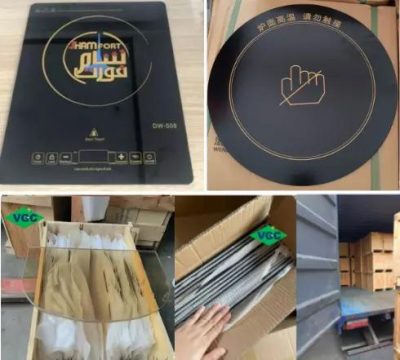
1. Fundamental Distinction: Heating Principle-Driven Design
The primary difference between induction cooker glass and infrared cooker glass stems from the unique heating mechanisms of the appliances they serve, which dictates their core performance requirements.
1.1 Induction Cooker Glass: Optimized for Electromagnetic Induction
Induction cookers operate based on electromagnetic induction: the cooker’s coil generates a high-frequency magnetic field when energized, which induces eddy currents in ferromagnetic cookware (e.g., iron, stainless steel), causing the cookware itself to heat up. Since the glass panel does not generate or conduct heat directly, its core requirement is to facilitate electromagnetic field penetration while ensuring electrical insulation and mechanical protection.
1.2 Infrared Cooker Glass: Engineered for Infrared Radiation Transmission
Infrared cookers (electric ceramic stoves) rely on infrared radiation heating: a heating element (e.g., nickel-chromium wire) inside the cooker generates high temperatures when energized, emitting infrared radiation that directly heats the cookware and food. The infrared cooker glass must transmit infrared radiation efficiently while withstanding high temperatures and thermal shocks from direct heat exposure.
2. Core Material Differences
Material selection is a key differentiator, as each type of glass must meet specific performance criteria derived from the cooker’s heating principle.
|
Criteria
|
Induction Cooker Glass
|
Infrared Cooker Glass
|
|---|---|---|
|
Primary Material
|
Tempered Black Crystal Microcrystalline
Glass (e.g., Schott Ceran, Neoceram)
|
High-Purity Borosilicate Glass
or High-Temperature Resistant
Microcrystalline Glass
|
|
Material Rationale
|
Low magnetic permeability,
high electrical insulation,
and strong surface hardness to support
electromagnetic field penetration
and resist cookware scratches
|
Excellent high-temperature resistance,
thermal shock resistance,
and infrared transmittance to withstand direct
heat and enable efficient heat transfer
|
|
Impurity Control
|
Strict control of metal impurities
to avoid interfering with the
electromagnetic field
|
Minimal impurity content to ensure
high infrared transmittance
and thermal stability
|
3. Key Performance Parameter Differences
Performance parameters further distinguish the two types of glass, reflecting their adaptation to different operating environments.
3.1 Temperature Resistance
Induction cooker glass operates in an indirect heating environment, with the maximum temperature typically not exceeding 300℃ (the heat is generated by the cookware, not the glass itself). Thus, its continuous temperature resistance requirement is around 300℃-400℃.
In contrast, infrared cooker glass is in direct contact with high-temperature heating elements, requiring resistance to instantaneous temperatures of 700℃-800℃ and continuous temperatures of 500℃-600℃. This is why borosilicate glass, which has a low coefficient of thermal expansion, is widely used for infrared cooker glass—it can withstand sudden temperature changes without cracking.
3.2 Electromagnetic Penetration vs. Infrared Transmittance
Induction cooker glass must have high electromagnetic penetration to ensure the magnetic field generated by the coil can effectively act on the cookware. The glass is typically processed to minimize electromagnetic shielding, with a penetration rate of over 95% for high-frequency magnetic fields (20kHz-40kHz).
Infrared cooker glass prioritizes infrared transmittance, especially for mid-to-far infrared rays (wavelength 2μm-15μm) emitted by the heating element. High-quality infrared cooker glass achieves an infrared transmittance of over 85%, ensuring efficient heat transfer and energy savings.
3.3 Surface Hardness and Wear Resistance
Both types of glass require high surface hardness to resist scratches from cookware. However, induction cooker glass often has a slightly higher hardness rating (≥ Mohs 7) due to the frequent sliding of cookware on its surface during use. Infrared cooker glass typically has a hardness of ≥ Mohs 6, which is sufficient for its application scenario, while prioritizing thermal shock resistance.
3.4 Electrical Insulation
Induction cookers operate at high frequencies and voltages, so their glass panels require excellent electrical insulation (breakdown voltage ≥ 15kV/mm) to prevent electric leakage and ensure user safety. Infrared cooker glass also requires good insulation (breakdown voltage ≥ 10kV/mm), but the requirement is slightly lower due to the different electrical structure of infrared cookers.
4. Application Compatibility and Selection Guidelines
Understanding the differences between induction cooker glass and infrared cooker glass is critical for correct selection and application:
-
Induction Cooker Glass Selection: Prioritize electromagnetic penetration, electrical insulation, and surface hardness. Choose tempered black crystal microcrystalline glass from reputable manufacturers to ensure compatibility with induction heating systems. Avoid using infrared cooker glass in induction cookers, as it may block the magnetic field and reduce heating efficiency.
-
Infrared Cooker Glass Selection: Focus on high-temperature resistance, thermal shock resistance, and infrared transmittance. High-purity borosilicate glass or specialized high-temperature microcrystalline glass is preferred. Using induction cooker glass in infrared cookers will lead to rapid cracking due to poor thermal shock resistance.
5. Quality Control and Industry Standards
Both induction and infrared cooker glass must comply with strict industry standards to ensure safety and performance. For induction cooker glass, key standards include IEC 60335-2-6, which specifies safety requirements for induction cookers, and EN 61558-2-19 for electrical insulation. Infrared cooker glass must meet standards such as IEC 60335-2-34, which governs the safety of electric ceramic cookers, with additional requirements for thermal stability and heat resistance.
Conclusion
The differences between induction cooker glass and infrared cooker glass are rooted in the distinct heating principles of their respective appliances, leading to variations in material selection, performance parameters, and application compatibility. For manufacturers and buyers, recognizing these differences is essential for optimizing product performance, ensuring safety, and avoiding compatibility issues. By prioritizing the right type of glass for each cooker type, one can enhance the overall user experience and extend the lifespan of cooking appliances.